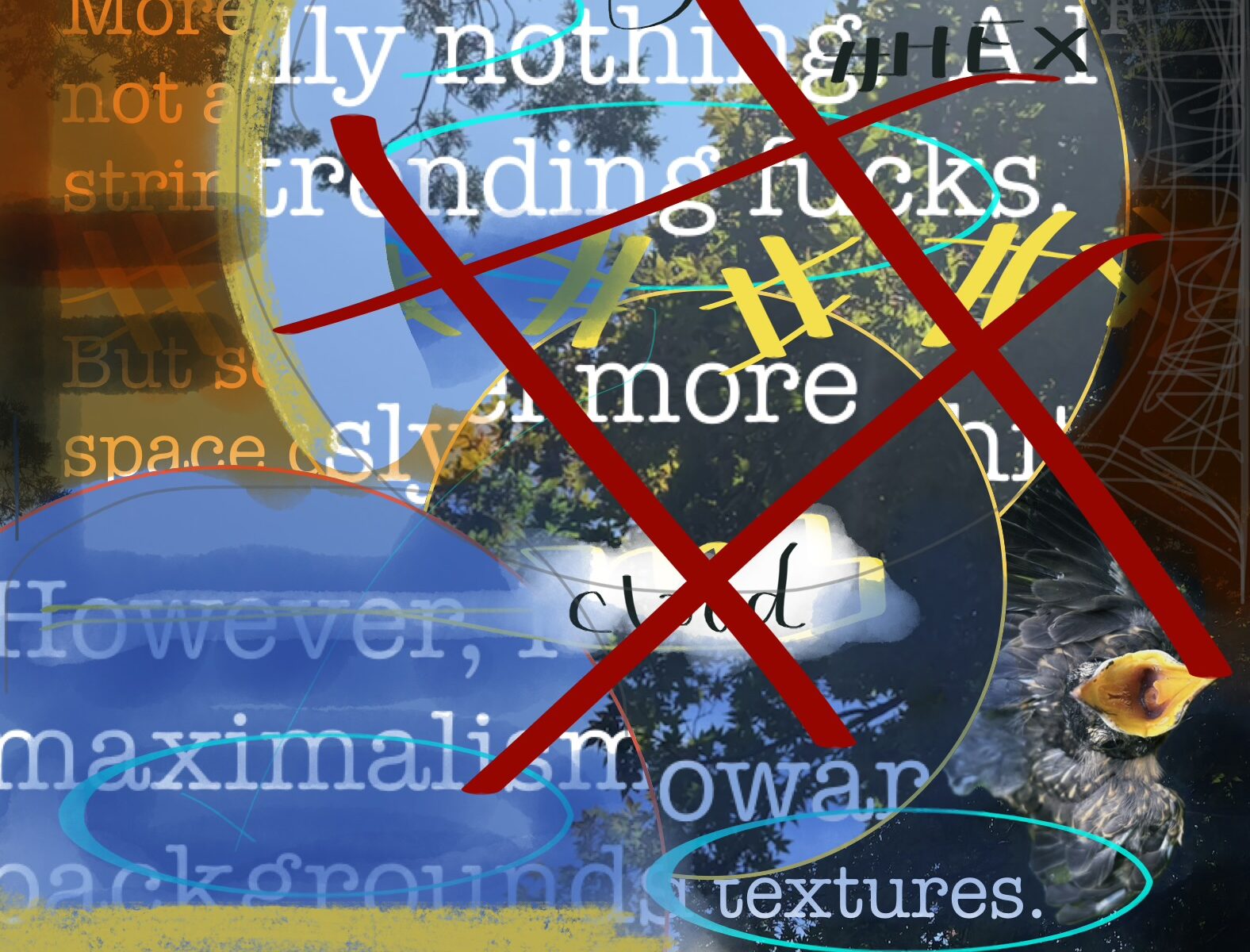
How a bold brain chat changed my ability to understand what people are talking about.
About two years back, my left and right brain hemispheres had a bit of a blasting chat. Like, a life changing conversation that left both parts more in touch with one another and my sense of myself wildly different.
Words that I never thought about using before (like “before” and “using”) felt brand new and I became preoccupied with understanding them.
The bold chat thing was born of burnout, depression, and complete exhaustion.
After I came to, I began writing in earnest like my life depended on it. Taking down concepts (like brand1) to the studs, and rebuilding them in a way I could newly understand and function.
This time affected my ability to use words easily and naturally. And relationships changed too because my ability to speak with people in easy ways became stilted, which in turn made me feel embarrassed, and really stupid and brilliant all at once.
This experience also made me use words more consciously, and to drill other people for meaning, or ruminate when people used words in ways I deemed “loose.” I became prudish about all words connected to sexuality, avoiding them like the plague, and feeling embarrassed about words that have no sexual connotation unless you are a junior high student snickering about “coming” and random stuff like that.
So this is how I came to write about topics like art, creativity, media culture, and Buddhism– trying to sound normal, like a scholar would. I wanted to sound like I knew stuff, but without revealing my own predicament that felt a touch like insanity.
Also, since scholarship is an actual profession, and my business of 20+ years was blindsided by some young bucks hacking into my business assets, I figured I’d need a new profession too.
Examples of how this brain chat changed my understanding:
Space: If someone said they “needed space,” I felt upset that they were trying to claim space, like a squatter. I felt protective of space (the place) and internally upset like, “how dare they try to steal the universe! I won’t give it!” This is likely because space had been a beloved area of interest of mine since childhood, when I spent hours contemplating the universe and marveling how I was a tiny little speck in the vastness. That feeling was so awesome, it kind of felt like ‘mine.’ Still does, if truth be known.
So, people like Elon Musk – who are actually claiming space by peppering satellites in the sky and building X-marked craft to go to Mars – seemed a bit like awkward youngsters pushing their desires all over the place and wrecking my loving, stewardship-based view.
Space had been a final frontier2 for most of my lifetime, after all. Now it seems no longer final.
Railing: If someone talked about railing against something (like the machine, their boss, the world), all I could think of was the first railroad industrialists and how they shaped how our country works. I also experienced railing against to be a physical impossibility because railroads were covering such vast geographic areas, how could that sprawl push against anything else?
Also, there was an amazing man named Karl Fisher up my family tree who adopted my paternal grandmother. He became VP of a rail line and got good stuff done. So you know, I feel like I owned railing too in my DNA (except I didn’t because of adoption).
Launch: In my previous life as web designer, I used the word “launch” all of the time with clients, along with “server,” “host,” “header,” and”bots” and other field-specific terms. You should have seen the time I casually mentioned “bots” (in terms of driving up stats for a library website), a woman at the meeting looked like she’d seen a ghost! Robots!
Now I get a touch nostalgic about “launch,” thinking of a brighter time in our nation’s history (1960s) with the advent of space travel that everyone tuned in to see on TV. Of course, I was not yet born when the space race stuff began, so my nostalgia3 is manufactured, not remembered. Isn’t that the way of most nostalgia and going “back” in time?
Yet, shared excitement over exploration is so beautiful. And now that I have teenagers, I can’t help but ponder “launching” in new ways: what makes a healthy, celebratory, and loving launch for a young adult?
And I occasionally still ask myself, what the F happened to Elon? Oh yeah, maybe he’s simply trying to get space.
Dreams: I also get a touch stuck on “dreams.” Sometimes I wake up with maps fully formed in mind, bird’s eye views of real places, or in a cool spaceship headed to another planet. And sometimes I’m awake thinking about how much I love to sleep. Often, I’ll write something here about valuing dreams (as in dreams of a good future). And sometimes, I can’t tell the difference between usages. Dreams with REM and dreams envisioning a future: both are intangible, yet important.
“To sleep, perchance to dream” – Shakespeare
Ghosting has become a bummer at best, disorientating at worst. An old friend ghosted me (in sense of stopped talking to me) after I texted her suggestions about her business and awkwardly tried to separate my business from hers. I was experiencing being hacked, and feeling protective of my circle. Can’t blame her really, I think she was having a bad day and we were texting after all. Hard to have a sense of humor when you are exhausted.
After that grief, I met some wise elders, and someone I care about died. Between all these events, I became aware of “the other side” in a very direct way. And I realized there was really no particular difference between life and death, other than my point of view and experience of where I stood at that moment.
So “ghosting” as a concept made me question what “side” of life I actually was on. Still not entirely sure, but calling this side life. I’d like to also call it, “a good life.”
I could go on and on, and have with my “terms of endearment” posts, but will touch on words like use real quick too. And also profession, sense, and the entire category of prepositions.
Prepositions in general: because I sometimes hear language in terms of my entire body, prepositions occasionally feel like they physically shift my perspective. Take for instance saying someone is jumping off the swing vs. jumping around the swing. The physicality of these statements is vastly different. One little word change, huge physical shift.
Profession: this word is up for me right now as my profession (my field of work, and that which I profess) is changing in real time. I am shifting from being a website hosting person who launched websites on servers (and before that was a server and host who worked in restaurants), to some other kind of digital experience maven.
Sense: this word when used like “making sense” or “common sense,” I’m reminded of cents, and my experience of physical reality. When concepts (in the form of words) touch on experience (via engagement of the 5 senses), they make sense. That is, they ring true. They also maybe make cents. But may or may not make common sense. Because my profession is changing, my desire to make cents (or with inflation, dollars) had become a preoccupation.
Use/Useful/Usage: all of these words give me pause. While I usually feel good when my presence and actions are positive and useful to another person, I’m also aware of when someone tries to use me for their agenda without my consent. My skills have occasionally been offered to others without my agreement, which feels like pimping, and yet, when I offer my work freely, it can feel great.
Also, my mother taught me to be aware of those who seek to use others. Maybe she was railing against a patriarchal construct: “important” men sitting around thinking about how to use swaths of people, machines, and natural resources. She wasn’t a fan.
I found usage is not relational, more often exploitative. Especially when industrialists, tech bros, and world/NGO leaders talk about people in broad terms without suitable respect and care for individuals. Like referring to “followers” or “the public” or even “workers” and groups like “the middle class,” in ways that imply they can control these groups by exerting economic levers.
So distasteful if you care about relationships and people more than say, levers, functions, and efficiencies.
Expression: I’m adding this word here because this is a cornerstone of nearly everything I do here. I’m expressing myself, after all (as writer and artist), I use expressions (including idiomatic ones) to communicate, and feel emotionally tied to the word from the days when I breast fed my kids (when one talks about ‘expressing’ milk). As a menopausal woman, this is also up for me.
Conflation: I’ll call this the art of minding how you understand or collapse words into personal definitions and associations, even when there are dozens of relevant cultural or professional dimensions to honor.
This is the etymology of this term should you care to go deeper.
Disambiguation: finally, this is a word I just learned this year, while looking something up on Wikipedia. There are stand-alone entries existing purely to disambiguate terms, names, and concepts from one another for clarity. When I had a more natural, casual relationship with language, I never needed to disambiguate.
Now I spend time disambiguating language, on purpose4.
Thank you for reading. If you know me, you’ve seen how I’ve been changing profession and also, the questions I ponder and my attempts to communicate via art.
And for the sheer sense of overdoing it: here’s another glossary too.
- Another search result, on brand. ↩︎
- I’ve written about it so many times, another beloved part of my childhood, Star Trek. ↩︎
- A shout out to artists Frank Moth who ‘attempt to escape from the ephemeral and hard present to a nostalgic past future.’ See their work please. ↩︎
- What is a job where I could get paid to do this? Oh yeah, please consider subscribing. ↩︎