How to create measurable success when your midlife situation or livelihood gets badly busted.
I’m in midlife, and apparently, most people are doing this sh1tshow better than me. Double career changes in my household is shaking up basics like health care and cash flow. I find this confounding, because I’m used to winning. I play so small, logging wins like $51 real dollars, but now I realize, that doesn’t help. Winning is doing your success formula well.
And, like the word says, this “con” has been “found” smack in the middle of chasing dollars instead of practicing success: IE, I’ve been busted!
So below is a story, a formula, and some questions to get you thinking about your next best moves – especially if you are in the midst of a midlife thing and want to win again.
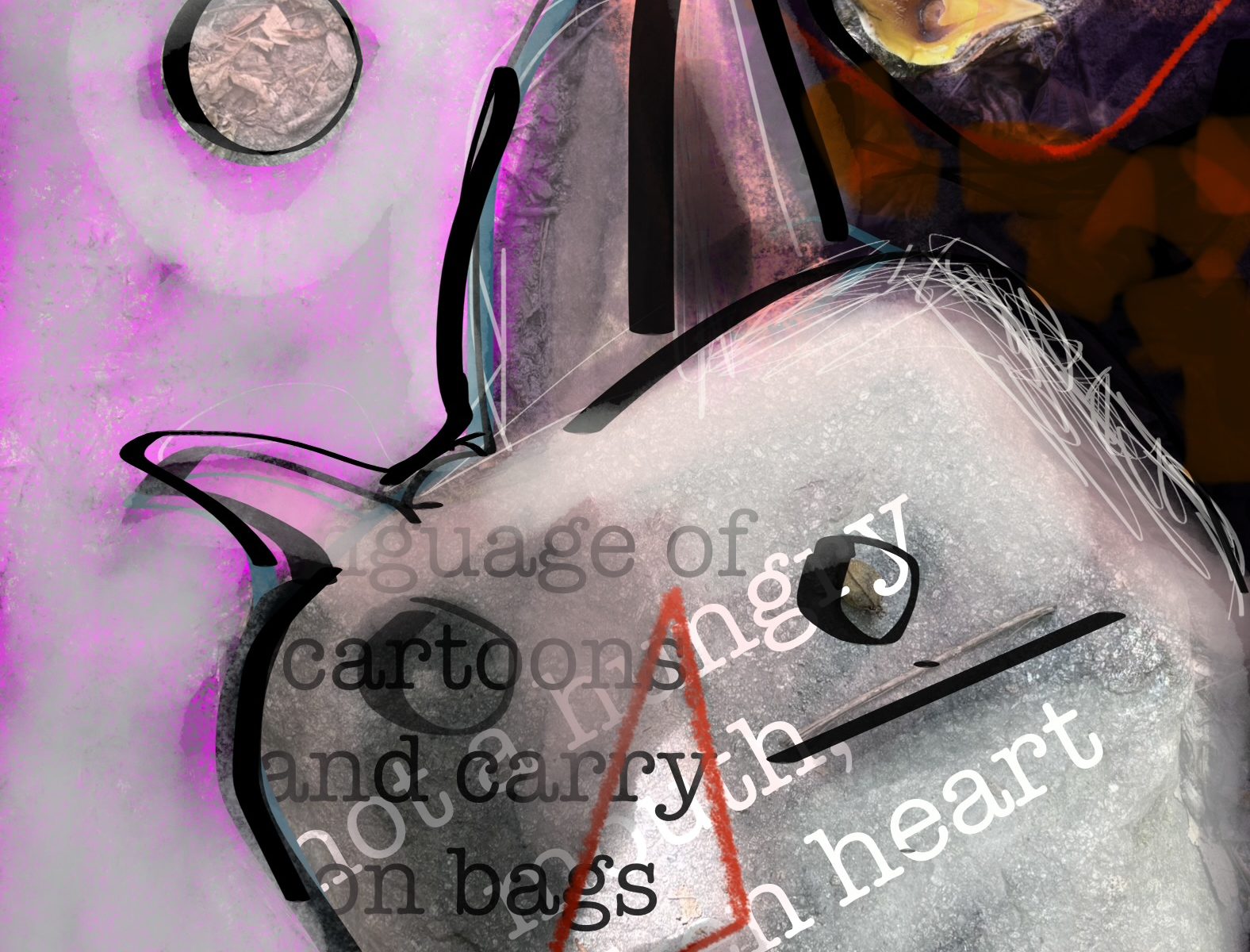
Photo + Markup Art = SymbolWork
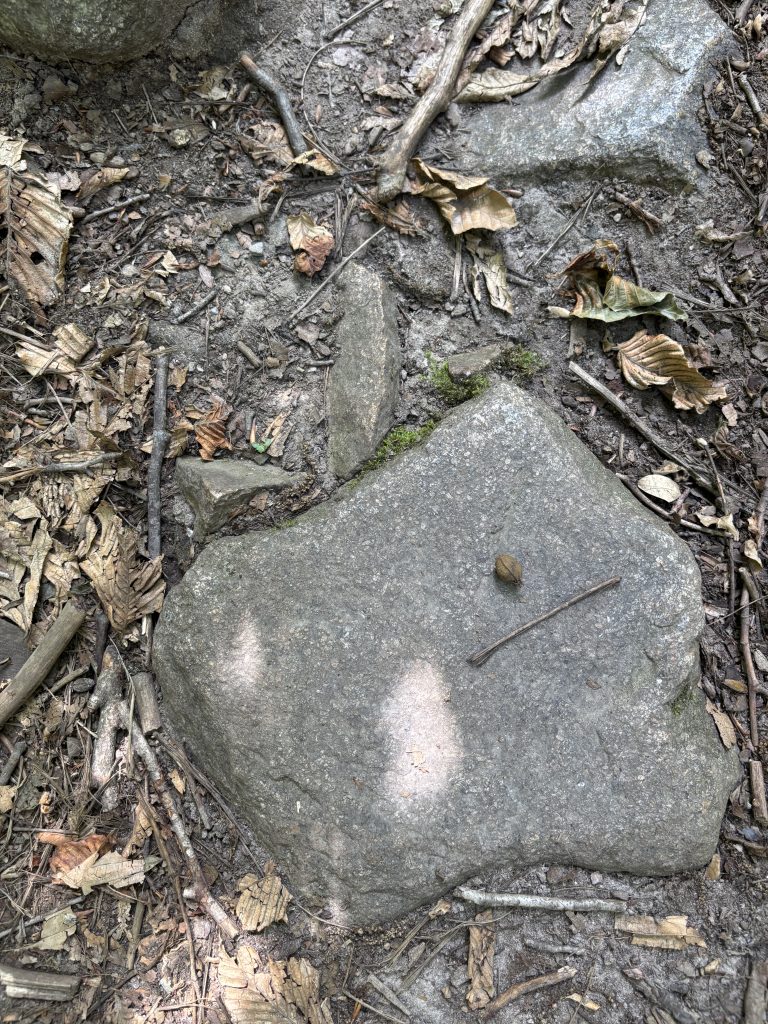
“Rock and Stick Language of Cartoons and Carry On Bags”
© E Mullen Matteson September 2026
SIGN UP t0 get notified of art drops.
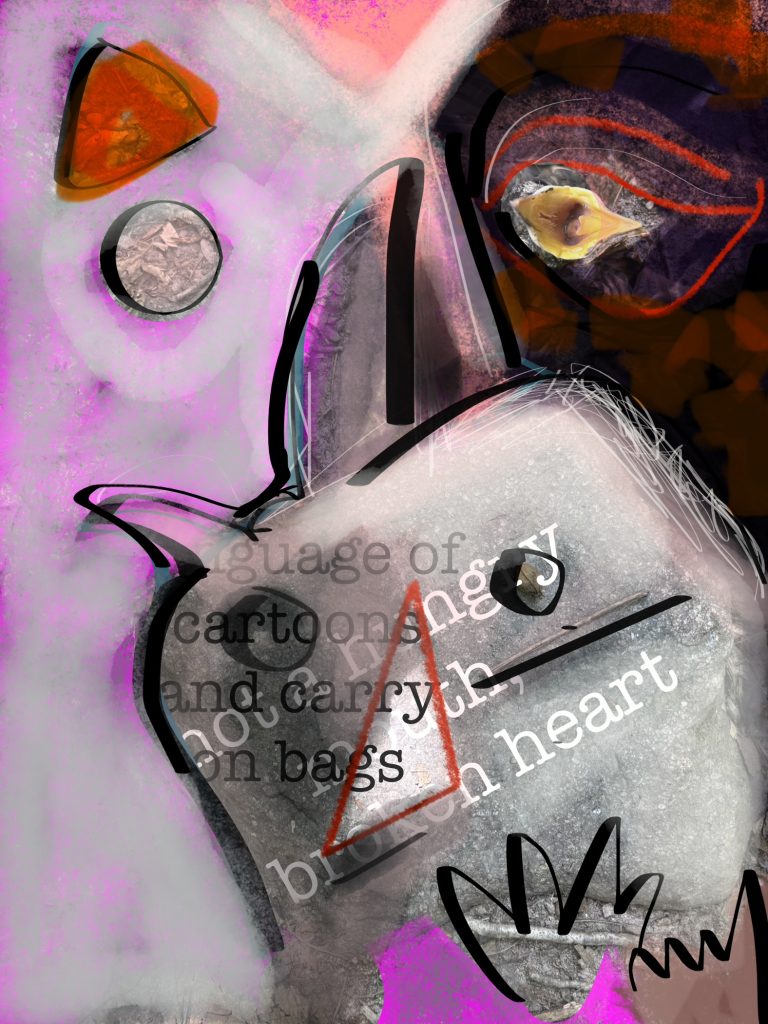
Polyester Preamble
Around 60 years old, my father says to me, “no synthetic fibers shall ever touch my skin.” He said it as a joke and edict all at once, so we’d never buy anything other than the requested standard: Brook Brothers Oxfords for conservative old bros.
See, he’d found that when he was “irritated,” the organization he led would actually suffer, 0r at least that’s how he perceived it. So, he began wearing only cotton, merino wool, and linen, and eschewed polyester in all its forms.
My brother and I laughed hysterically about his elitist edict, but I can now see the point in my father’s penchant for pointelle. Polyester physically annoyed him, and when he was annoyed, he’d act annoying. When you are a leader, you can’t afford to do that. It makes your team feel all pissy. Pissy is not good for making positive thing happen, unless you run a port-a-john outfit, then pissy is your business.
So, if you are in the role of President, Principal or CEO, a touch of itchy polyester can make multiple people feel terrible. And multiple annoyances makes for dysfunctional organizations. So he learned it was better to wear cotton and sit there calmly.
This also got me thinking about people who embody their roles at work, especially when it’s time to shift to a new position or shift roles. For these folks, the energy for positive change comes from the body first, intrinsic values second, ongoing practices, and a touch of grace and luck too. At least that’s how I’ve experienced it.
And if you are in any kind of transition, you’ll need to employ some strategic thinking about how your success will come by mapping the mechanics of how your actions will culminate in success.
I’ll share my meta-plan below. Works every time.
Photo + Markup Art = SymbolWork
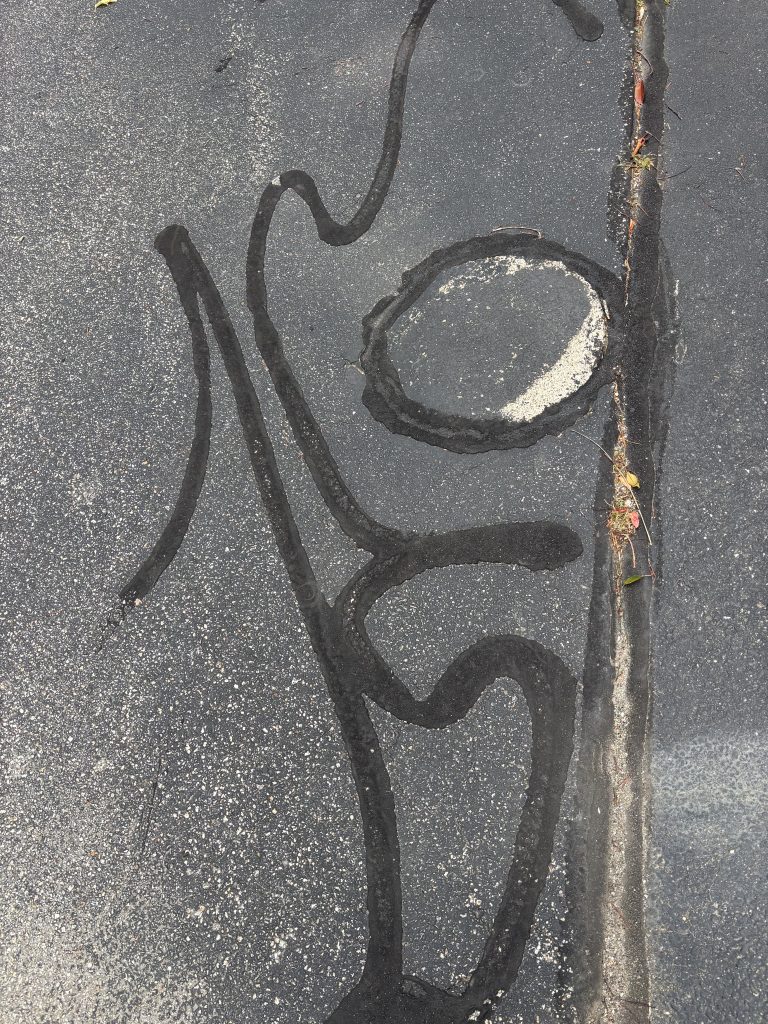
Untitled
© E Mullen Matteson September 2026
SIGN UP t0 get notified of art drops.
In an ADHD land of many activities, I’ve found Success is built by Passion + Practice, and measured best by Projects.
This simple formula can serve you too. Reinvention is an art form that requires more nuanced approach at different stages of life, and lots of evaluation points. And some mechanics consistently apply, including the knowing that success is a formula you set yourself.
I built this one from experience, not an airport books for business bros, although those work too, if you want to follow someone else’s path, that is.
Those of you who know me, know I’ve reinvented myself a few times as an independent contractor, a business owner, a partner, an artist, a community member, and dozens of times as project manager. Through it all I’ve done my best to keep continuity in my values, ethics, reputation, and demeanor intact.
Consistency goes a long way toward people being willing to let you help them, which I really enjoy. And, I’ve failed at that too, and been unpredictable, just for the record. Yet I’ve learned from successes and failures alike, and can speak pretty plainly to the efficacy of my formula as a workable one:
Passion + Practice + Projects = Worldly Success
The pluses are personal energy. Without them none of this moves.
If you’ve ever removed some wacky old piece of furniture, or raked leaves, you’ve experienced that personal energy grows calmly via the removal of things as much as the acquisition of things. So I’ll also address the midlife glut and ‘give and take’ inside the formula, while drinking good coffee in my 100% cotton sweatshirt. I’m in charge of my little world after all, may as well be comfortable.
+Passion
People overuse this word in business and life, like we are all walking around in touch with our “passion” all the time. Many of us have tamped down our enthusiasm, or it’s been culturally squelched, feels embarrassing, or it reads as unseemly. After all, passion is associated with sexuality, so it is not always to be discussed in polite circles. Oh my, where’s my fluttering fan?
For this reason, I suggest identifying your authentic, youthful passion by asking yourself a few questions and writing the answers:
What did you love to do when you were 10 years old? What specifically about that activity felt good to you? And what else did it feel like?
What did you say to yourself while you were doing those things? How did you breathe and hold your body?
And for the flip side of things, here’s a midlife corollary question:
What do you dislike as an adult? What is an activity, that if it were handled, would free you up to be calmer or happier? (you could think of this answer as revealing your personal “polyester”)
These last two questions are unique to being older: they are a way to access a burst of energy from the subtraction of what bothers you, even more so than the addition of what you think you’d like like when you were a kid, hopped up on sugar buzzes from Froot Loops.
Getting clear on your energy sources is important, but also can be challenging for inherently creative people: we generally don’t like removing things. It’s way more fun to visualize passions and make new things happen atop the pile we’ve accumulated.
So maybe, do both.
+Practice
You could subtitle this patience, because when you are in transitional phases of life, jobs, or even roles, you need to do something, and you also need to keep taking action when results seem slow to come. A common approach to a transitional phase is to search for the next thing, or wait for the next thing, or try to figure out solutions, or learn, or network, or seek open doors.
That kind of stuff feels like action, but doesn’t build success. Building builds. Doing does.
Practice is what creates routine in your new role while also building a practical foundation for it. See, if you have loads of experience building something new, grand, bold or even ridiculously delightful: you’ll be comfortable doing the thing when success arrives. You’ll just keep on doing what you already enjoy.
This is a winning formula, and great for easy arrival.
That’s because you are practicing your craft, even when no one is watching, or if they are watching, they are watching with curiosity and amazement of ‘just wtf are they up to?’
Curiosity and wonderment are not bad things to have directed your way. There’s energy in that too.
Practicing a positive thing you love (like learning to surf, building a body of work, making bread, writing a book, exercising, meditating, or learning a new skill), means that when the tides turn for you, you’ll get to ride onshore on a big ass wave with something everyone can spot, like a measurable. . .
Project
Projects by definition have a beginning, a middle and an end. And they can be evaluated by self and others. There is a point in every project that reflects a wrap, where one evaluates what worked and what didn’t, and makes better decisions for next time. Projects are discrete. Oh my, where’s my fluttering fan again.
If your project has no end, instead is a role (like parenting), then the more you set up incremental reflective/evaluatory moments, the better you get at succeeding.
To know a successful “end” you also need to recognize the middle for what it is.
If you are in career or life transition, you are by definition, in the middle. Yeah, transitions can be boring as sin. And our game of life runs on a clock, a touch like Sunday Football1, so if you don’t know how to win but by getting a win, it’s helpful to chunk down your game into increments, so you can check what needs adjusting at each quarter and take the wins in process as they come.
More examples: if your project is to build a house, at some point you get a COO – that’s the project end. But along the way, you may celebrate great framing complete, plumbing installed, or perhaps drywall time. If your project is to build a body of work, you can measure your success by how much work you make, and its quality at each turn, or perhaps from feedback from those who follow along [thank you subscribers!].
If your project is a special event, you can look around at how many smiling faces showed up, and the take at the till.
If your project is trying out a new lifestyle or new role, you can notice results by paying attention to the fruits of your endeavors, and celebrating the people that you’ve gotten to know and the fun you’ve had along the way.
And without a clear “end” to an important role (like parenting), one may need to create conscious time demarcations to review what needs adjusting and how to best to do that. In my world, Project Parenting needs some practical decision-making times, and precise measurements like screen time vs. outdoors and looking for visible happiness and listening for laughter too.
If you are key leader of a family, for instance, you may wish to set up check points, like getting your kids to various stages before their happy launch into adulthood. And, if you are on a team, the conversations and adjustments need to be shared, as do the challenges and victories, just like in your other life’s work.
Passion + Practice + Project = Success.
____________
Bonus Question: what is a problem that others need solved, that they don’t even know could be solved, but you can?
FOOTNOTES & SUB-SUBTEXT
- Right now Jacksonville and the New England Patriots are playing. I have interest in both teams winning: one for legacy sake, and one for the sake of the young head coach Liam Coen. Rooting for the Game seems a great idea. I stole that concept from my husband. ↩︎