After disasters, harsh realities, assh*les, and accidents, we are 100% allowed to be grateful those aspects of Self that help us to carry on.
CRYSTALLINE CLARIFICATION HERE: this piece is not about whitewashing trauma. It is also not about justifying it either, even if there is a bit of “silver lining” present. Creating physical or psychological trauma for others is wrong. Breaking the basic laws of decency, or the law of the land, in my opinion, is also wrong. Harming children is dead wrong.
Bear with me on this. I’m going to talk about how trauma shaped me into becoming a better person than I may have been if I hadn’t gone through it. And in my case– and many others too– trauma may even have granted a kind of psychological superpowers1.
And I hope you’ll look at your own trauma responses with compassion, and relate to yourself as strong as much as flawed. From this, I hope, can spring good things for you and your community.
To get the history out of the way: I was groomed by a few men in my home town and raped by one at 14. When I told my best friend, she looked like she’d seen a ghost, and we never spoke of it again. Two years later, I told my mother. She was doing her best as a single mom and near crazy with rage. She tossed dog poop into the man’s car via a stick from the side of the road. She told me she had to do something because I refused to take him to court. I wasn’t consoled or delighted, but I knew she was protective in her own way.
Like a lone wolf looking out for a pack of the same.
Because of that incident, I learned how to reinvent my sense of self by completely cordoning off that experience as “not counting.” I also refused to consider myself a victim, or anything other than a virgin, and implemented horse-blinder-styled denial for understanding myself and my future actions.
And it worked. I carried on, as if the thing had never happened.
Of course, calling reality not real is ridiculous, but locking in cognitive dissonance built a capacity for re-working my framework of reality when life feels overwhelming. I’m guessing I’m not the only one.
The decision to ignore something real also literally blinded me to that person’s presence in my very small town: I never saw him again, except one time I blacked out and went hysterical when he showed up where I worked. I still don’t know what happened except that an older waitress spirited me away and talked me with a comforting calm until I came to. Thank you Virginia.
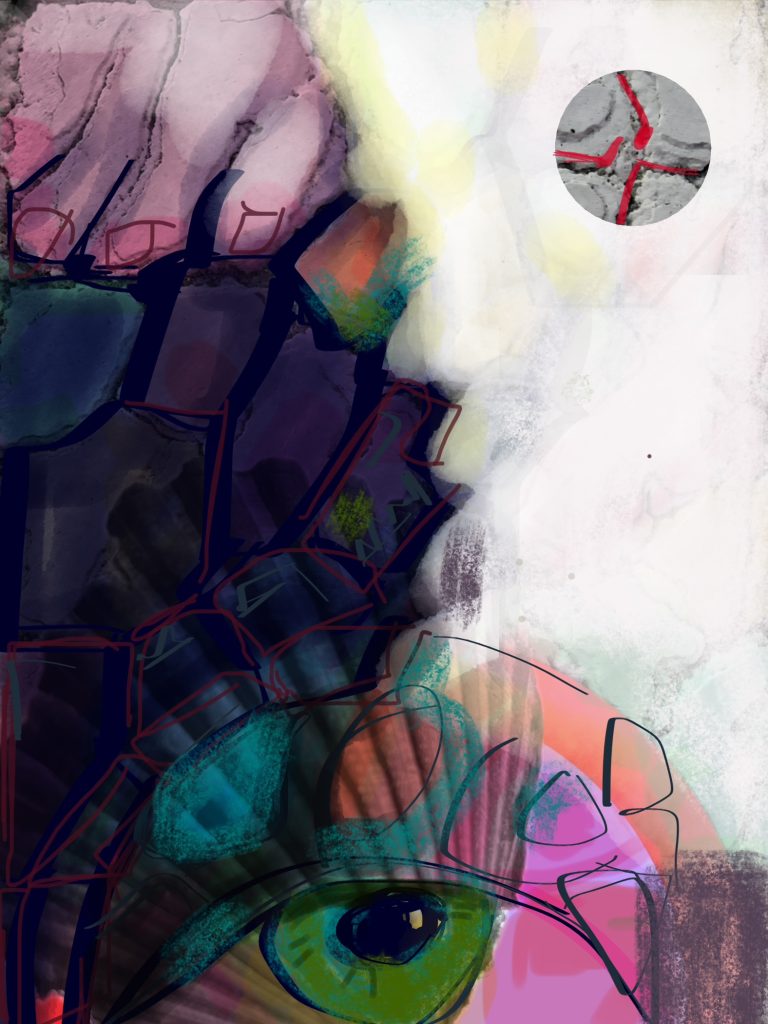
Photo + Markup Art = SymbolWork
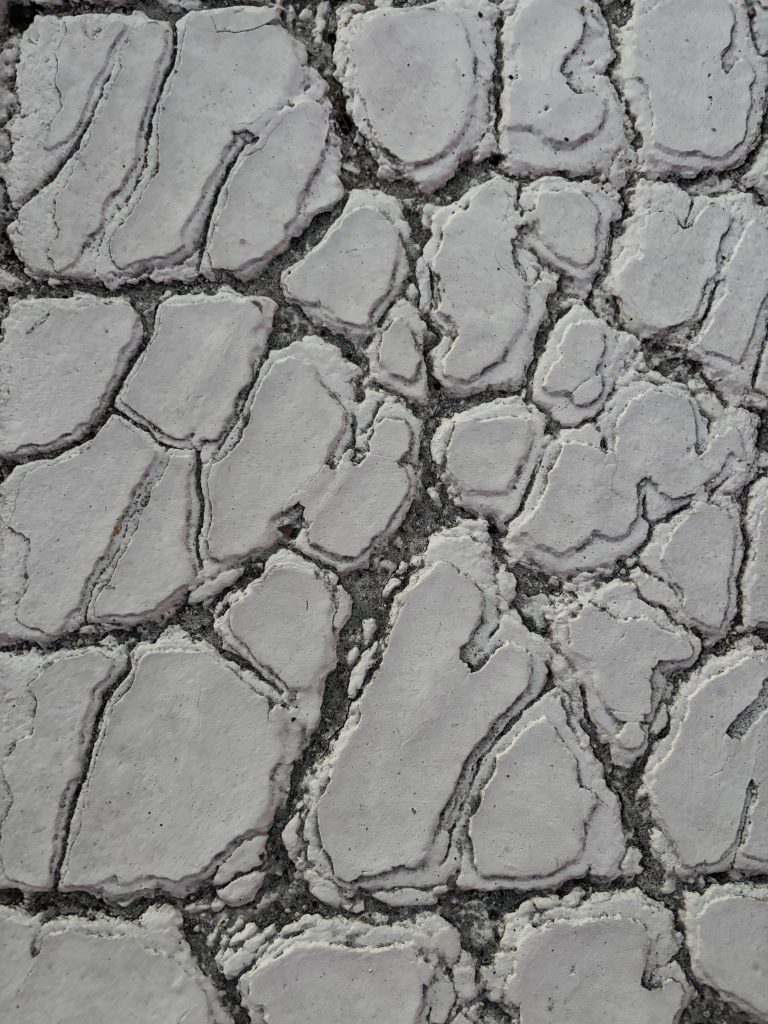
The Foot Falls
© E Mullen Matteson Aug 2026
SIGN UP t0 get notified of art drops.
So when I wonder how people can do heroic and loving things despite living in hellish, or war-torn areas, I think they too must have powerful coping mechanisms. How can hurt people help others, even while suffering themselves? How can hurt people discontinue patterns of pain and accomplish good things?
Perhaps: coping mechanism + character + choices = amazing graces.
Trauma initiated an interesting sort of magic in my life as well, spiriting me away from suffering in moments when sh!tty people tried to take from me more than I was willing to give.
As a kid, I could turn denial “on” and rise into a bird’s eye view of nearly any situation: aloof and apart. This capacity came about after an actual mind/body disassociation and loads of years staring at the stars, yet is a useful talent for recognizing organizational dynamics, ancestral patterns, and a long arc of time (among other things) from a standpoint “above.”
Traumatic experience can also highlight in the idea that one is worth protecting. Who did the protecting in my case, I can only chock up to Nature with a capital N. As my brain did a spectacular bit of disassociation from my body, I stared at leaves, trees, and the sky behind them, and I experienced floating up into the scene. And it was beautiful.
If you’ve made it through trauma, it’s important to acknowledge that you were protected, because you made it through to read this today. So, now what?
Cope, then do something good
We all know the person who fell off the monkey bars, and never got on them again from fear. A person who was hurt by another, may break off communication, especially if it triggers2 a survival issue from an earlier time. That’s a trauma response.
Today’s reaction to a related situation may not be rational or proportional to the moment at hand, but if one’s survival instinct is triggered, the emotional energy of birth, death and everything in between can feel ignited3.
Coping needs to be followed by creativity: making new choices, designing new visions, building new relationships, and creating new futures.
In other words, denial and horse blinders are not only pathology, they are also protective mechanisms that help us move forward to share our lives with others who may need to know they are not alone. Maybe if we become conscious of our own psyche safeguards, we can use them for good, and rise above hurt in ways that support our community.
Creativity can serve as a distraction from pain and as an alchemical process that makes beauty out of pain. If the resulting art work stands true, it can also make a symbol out of healing.
And, as long as our personal coping mechanisms do no harm, we can cultivate them, practice them, and even escape into them at times. This is a natural adapti0n for human beings. Sometimes humans need a break from the world’s agenda and stressors.
And when one side of the seesaw of life dips our arses into hell, we need to weight the other side more heavily to protect us from future imbalance.
Nature as a consistent cure.
As a teen, when my mom felt I was too feral for her to handle, she’d drop me off a half-mile from home with tent and a flashlight and tell me she’d pick me up in the morning. “If you want to live in the wilderness… live in the wilderness.”
She told me later, she thought I’d be scared and rush back home, crying. Instead I loved being alone, and built an identity around independence instead. I loved the sounds of the owls, and watching the dark branches rustling through the triangle shaped mesh in my pup tent.
The moon and stars were immensely bright, the breeze spoke to me.
Her discipline was innovative, and because of that I always could count on Nature when people did me wrong, and when I did wrong too.
So back to that moment at 14. Because I had not agreed to my ‘deflowering’ I decided it simply did not count. I reclaimed Virginity, even though the practical matter of what had happened to my body was the opposite. And that’s what the human mind is capable of, rewriting personal history, while acknowledging the opposite reality in tandem. [More on reconciling paradox here].
Cinema, Stories and Wrapping Up with Royalty.
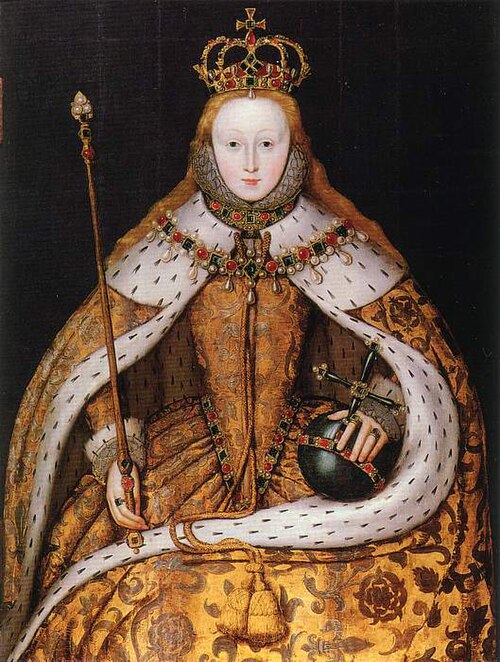
Exactly 15 years later after that moment, I saw the fictionalized movie Elizabeth with Cate Blanchett, and knew I wasn’t the only person who had owned a difficult history and still moved on to do good things.
Elizabeth Tudor was a child pushed by political forces into the label “bastardry,” protected and exiled all at once, and born of a formidable mother. Anne Boylen lost her life after she gave her body to a confused king, because her body did not produce exactly what he wanted, although she did produce a person of strength and character who ruled for 45 years.
Elizabeth Tudor took the throne after killing a pile of disloyal schemers, and “married England” to became a “Virgin Queen.” She did this in full view of the public, even though, she had had lovers and was not an actual virgin. No one was fooled. No one cared.
This movie is another example of art and story becoming a mechanism of paradoxical understanding and healing. For me, it also showed me the power of self-determination despite a difficult background and world that sometimes works against complicated women.
To end on a note about true Queen, Elizabeth I reigned during the English Renaissance (1558–1603), which was a period often called England’s “Golden Age.” During this time the Arts ignited and the time served as the foundation for the later Age of Enlightenment.
Not bad for a bastard, non-virgin, virgin Queen, who rose despite the odds to rule over a time of great culture, the arts and prosperity.
Anyone who has made it “through” trauma, illegitimacy, and darkness, has gifts that they can utilize in their life to support a better day. Whether perfect or not, with pedigree or fallen birth; it’s a natural fact: we get to call our lives as we wish to.
A pile of harsh white makeup, a wild wide collar and title are not a bad thing either.
FOOTNOTES & SUB-SUBTEXT
I can’t help but think of this Japanese Kintsugi pottery in relation to the concepts within this piece. Where the repair process becomes the art and process of the piece.
- I throw this word “superpower” in here because the business-types love this jargon, later maybe I’ll tell you about being a “visionary” too. ↩︎
- I honestly can’t stand this word “triggered” as a way to reflect the touching upon an associative experience, because so violent, but everyone seems to know what it means, so I’ll acquiesce to using it for now. ↩︎
- Ghosting is an apt term for relationships ending after a trauma response has been triggered. ↩︎