I realized yesterday, the soaring health care costs I’m experiencing are mostly about keeping me in strong bones and boobs.
My entire adult life, I’ve avoided being considered “high maintenance.” It was a derogatory warning given me as a young person that seemed to only afflict women. So to avoid ridicule, I doubled down on being natural and easy, and strong, because I love taking personal rebellion all the way.
As a member of the middle class with a elitist ideological dashboard, I’d now like to turn this term “high maintenance” on its high heels, and bring it down to earth.
I believe there really is no such thing as high maintenance. There’s only maintenance. Below I’ll break down a few things around this idea in typical meandering fashion. Buckle up!
Much of the maintenance we need as humans is health care. And the health care maintenance we can access as women, especially considering the pay gap we collectively suffer, is not just.
Everyone deserves health care, always. I’ll start there.
Disambiguation High Maintenance
Pop culture definition high maintenance usually refers to people who spend a great deal of time tending to their physical appearance. While first used to describe highly primped women, the term became gloriously co-opted by drag queens, and later moved into the purview of social media influencers, most recently having hit young men with the “looks maxxing” trends. One of my most favorite artists who recently passed on, took this term to the fullest expression with wild irony and huge heart in equal measure. Dolly Parton, you’ll be missed.
In language high maintenance does not actually mean anything. Like the phrase too much, the modifier is only in relation to an arbitrary, unspoken standard. Business coach Tony Robbins once suggested (to break up mental tyranny), to counter “too much” with the question, “too much compared to what?”
You could also ask, what exactly then is “low”maintenance? Or a low-maintenance person?
Perhaps much of the corporate excitement over AI and robots is an attempt to answer this question to supply more need-less, controllable workers. I’m not a fan. I rather like people, even the difficult ones. But I digress.
High as a modifier to maintenance is irrelevant. If one needs any kind of maintenance, the need simply IS. High vs low is an arbitrary judgement that implies somebody somewhere is holding a measurement of what maintenance a human deserves to function.
If you don’t know where that judgement call lies, I suggest you reject and stand on what you need to be your best self, regardless of the nature of your requirements. In my case, I’m advocating for affordable preventative care and health care screenings, and even travel, training, and the experiences that make most of us feel our best selves.
As always, I welcome your responses, but even more, I welcome your solutions.
I was around 18 years old when I first heard the term High Maintenance (HM). My father mocked women who chased the earliest progenitors of Mar-a-lago face who sparkled with manicures and spa services. He determined they spent their days tending to their appearance, raising families, stoking culture, and maintaining social connections, instead of working.
He didn’t value these activities – relating to them as if they were “silly,” compared to what was clearly delineated as men’s work, which he considered “making a contribution” in organizational settings.
To his credit, he accomplished a good deal at a high level, so he was consistent.
My father also appears to have considered men as the visionaries and architects of how society, families, and economies should work, which makes perfect sense if you grew up watching loads of old white men in power set nations into place, and societies to work.
Historically, when women’s fight for the right to work outside the home was co-opted by capitalism, it simultaneously became harder for any single income to support a household.
Rising costs of living were not caused by women going to work, it’s more likely because titans of industry and leaders of larger trends may have found ways to eke more out of more people, which would centralize power and economic growth to a few. The changes toward equality simply didn’t happen in a balanced way.
But when does perfect balance happen? As a people, we seem to love also nurturing a culture that occasionally requires uprising. Underdog and punk rock styles and all.
Democratic Socialism and Universal Heath Care, Anyone?
In the 1970s, “anyone could be hired for cheap” to raise children, my dad told my mom, but not everyone could run a department at an agency, which he wanted her to do, while he did similar.
This attitude was likely indicative of the mindset that values efficiency, structures, and achievement: hire people for ‘low level’ activities and rise in the ranks of professional achievement. In his world, this was of key importance. The value judgement on “high” and “low” was personal, not absolute.
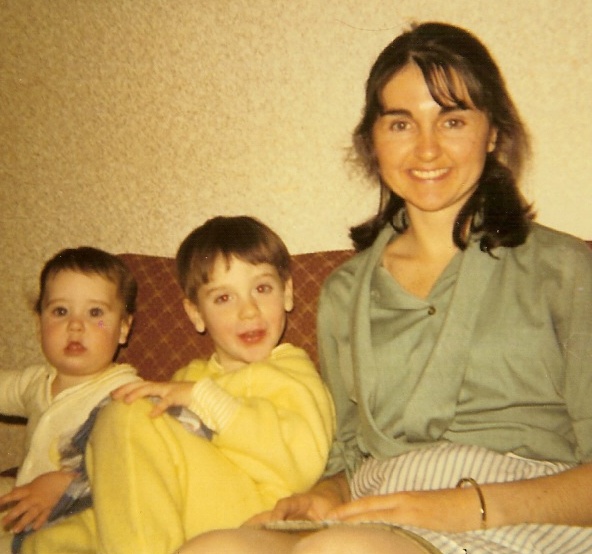
My mom chose instead to focus on intentional child rearing, staying home, and getting to know us little people by being present. Her Italian background helped her instinctively understand the value of a female presence in the house. They had a values mismatch.
And in the pop-culture sense of the term high maintenance, my mom was most certainly not that. It was the 70s and she was a natural beauty, braless, moon-faced and tired. No makeup, and often ripped clothes and furniture because we were broke. She read feminist tombs, followed national politics, and advised my father on how to spend his organizational capital: to help people in underserved communities.
So growing up trying to rebel against every standard life choice, I decided I’d be the opposite of high maintenance; choosing instead to be a pleasing and unassuming, hard-working, “no maintenance” kind of person.
To me, this meant being financially self-sufficient, do things like cut my own hair, buy my own clothes, fix my own car and problems, and renew myself in nature instead of by expensive travel, training, and restorative adventures. It also meant asking for little, and providing more to others than I imagined they could ever give back.
Giving a low maintenance experience and high value in work was a hallmark. Giving my best with intentional excellence and making it look effortless was a style. My goals and style were simply unsustainable.
No one is completely self-sufficient, and we all take turns requiring more… um, maintenance.
Work takes personal energy, and intentional work, even more so, and you simply can’t be low maintenance for piles of highly demanding people without something needing to give. In my approach, my health suffered, as did some relationships.
So high maintenance is a woman thing?
I don’t need to go into great detail on sexist gender standards, inherited from patriarchy and cemented in the earliest days western capitalism, where powerful men kept their resources within their progeny’s line, to explain why attitudes around women’s needs fell to sh!t.
The tales and research around gender inequality are old as the hills, and point to how power structures prefer to keep power inside those structures, like a patrilineal method of future-keeping, even though it is counter-intuitive.
Matrilineal resource passing is easier to confirm and makes common sense. You can always tell who a mother of a child is, but the father of a child was not always certain until the days of DNA testing. So how could a man keep their accumulation of assets in their genetic line? Institutions like traditional marriage, gender roles, awarding more economic power to men, and attempting to make women semi-dependent, worked like a charm.
Yet the patrilineal style of resource passing, means men may come to value their own contribution more highly than is appropriate. Because they earn more, does this mean they are worth more? What is a fair evaluation criteria if you quantify value using economic standards?
A patriarchal attitude bolsters the ideas that industry, economy, intellect, ruling, and building = highest level of contribution; and that raising children, teaching, tending to people, emotions and soul, and labor = lesser value of service.
We know this is simply not true. Without smart and healthy people, we will not have industry, or even high-level thinking ready to solve real problems that face all of us.
We need service-minded folks in all quarters to come forward and weigh in on how things can be better. What are your ideas? What are your stories?
Without paying women equal wages for equal work, we also won’t have a quality, long-lasting excellence in economy or culture either. Women know this gig and this gig is up.
My dad, being set on success, always knew that most women did make huge contributions in the realm of work, but conceded years later, always at a rate of 84 cents on the dollar of what their male counterparts earned. “It’s just how it was.”
When he was in a C-suite position and could have addressed this inequity in his organization, he acknowledged the forces and levers set to keep the current system in place. The mechanism to shift human resources around, but not pay equally, involved disruption, ego-stroking bullsh!t, and outside contractors.
I asked him not long ago. How did that organization manage to propagate inequality in modern days of HR departments? He had always loved having capable women working for him. He relied on them heavily and knew they made him the success he was.
He told me how at C-suite level, they’d hire a high-priced consultant (usually a male MBA), to help them restructure the entire organization with titles and increased/decreased responsibilities for various managers.
This consultant-led restructuring allowed them to shake out problematic staff by marginalizing their roles until they left, while simultaneously overloading the most capable women without corresponding pay. “You get to “own” this department or project!” they’d say, like it was a prize. That responsibility was presented as the reward.
What that project ownership was, was a way for capital owners (the people who had the right to sell the business) to capitalize intelligent human effort into their own future wealth.
“Efficiency” they’d call it. “Compliance” they’d also cite. “Equality” even. Instead in the cases my dad told me about, was none of the above. Instead real dollars got maneuvered into men’s pockets again, by leaning on existing gender-based power dynamics but calling it something else.
Consultants got the cash the key women could have received if they just received a suitable pay raises from their 84 cents to the full dollar their male counterparts received.1
I wonder what Lilly Ledbetter would say?
What would then happen is the “best” women would get better titles, and more work to do. They’d get a raise and manage a new tiered system to make it appear as if the women were paid equally. Enough to make them compliant, maybe flattered, and to keep working, but not enough to actually make things fair, or promote their well-being either.
I was relieved when my dad could tell me the mechanism by which this happened. I’ve been a victim of this very thing, being underpaid with grossly exaggerated expectations. But I’m to blame for that. I’ve also been a contractor, brought in to shape an organization and it’s employees. It’s a thing.
Recently, my health insurance changed for the worse. And now I face down huge costs for ‘preventative’ bone building medicine, and high risk screening care, I realize I’m as high maintenance as any other human.
My renewed interest in universal health care ignited by personal need.
My “maintenance” is just nowhere near as fun as for those individuals who are bumping up their foreheads with filler and Botox and sitting around in spas, whose health care is assured because they can pay out of pocket for concierge-styled care when needed.
We all need quality health care to stay alive, and to make a contribution to the collective.
Expensive co-pays for preventative care in my world is disappointing, especially since the insurance policies say all preventative care is “fully covered.” It is not. Getting proper health care for a fair price has everything to do with savvy, working with doctors to maneuver codes, fighting like hell for aid, special programs from Pharma, using the cheapest alternatives, and/or getting subsumed by your employer who provides the insurance which can make you feel dependent on them to quite literally stay alive.
Pointing out the obvious is often the first step in meaningful change.
As a woman with new health care needs, I can see plainly how the American health care system is not conducive to people functioning at their best once you hit something called “middle” age. And this is the nation’s loss.
I also know these battles for justice have been fought for generations, mine being one more attempt to bring awareness to a more better system for everyone who has not turned in their human card in exchange for multi-generational resource hoarding.
It’s also human instinct for me to write for what matters to me personally, so I don’t disregard my part of the political process. I’m sure we can all do better.
Thanks for reading. Want to help me stay in my bones, boobs, and continue to write here? Feel free to upgrade to a paid subscription.
Yeah, I thought so ;)
FOOTNOTES & SUB-SUBTEXT